
Plating Technology
2023-06-17
There are four types of coating for the mirror surface of the rearview mirror: silver plating, aluminum plating, inscription plating, and TiO2 carbon dioxide coating (commonly known as "blue mirror").
Silver and aluminum plated mirrors have a high reflectivity, although they can be seen clearly. However, long-term observation of the mirror surface can easily cause fatigue to the eyes, and the anti-corrosion performance is poor, easily causing oxidation, and the cost is low. Chromium plated mirrors have a better reflectivity for eye irritation and good corrosion resistance. Currently, most rearview mirrors use this type of coating method. TiO2 coated mirrors have an anti glare function to reduce eye fatigue. Currently, the use of mirrors for mid to high-end sedans is also common, but the processing process is complex and the stability of color difference is difficult to control.
Aluminum plated lenses: front plated
Reflectivity greater than 90%
General interior rearview mirrors,general exterior mirrors and tailgate mirrors are all aluminum plated lenses
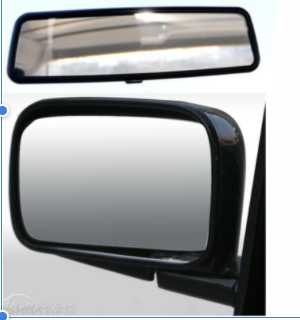
Chromium plated lenses: both front and back plated
The reflectivity of the front plating is relatively high, up to approximately 60%
The reflectivity of the back plating is relatively low, usually around 50%
Most rearview mirrors are chrome plated, and the reflectivity of the exterior rearview mirror is required to be greater than 40%
The reflectivity of the front plating is relatively high, up to approximately 60%
The reflectivity of the back plating is relatively low, usually around 50%
Most rearview mirrors are chrome plated, and the reflectivity of the exterior rearview mirror is required to be greater than 40%
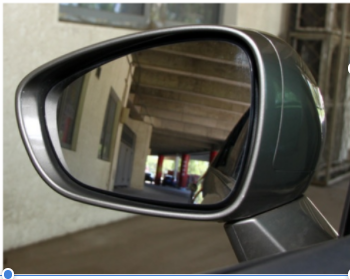
Blue lens: a multi-layer film of titanium dioxide (TiO2) and silicon dioxide (SiO2) material coated on a glass foundation, which can be precisely controlled by controlling the thickness of each film layer
The light reflected by the blue mirror interferes, resulting in visible light with lower main peak wavelength - blue light. Higher wavelengths of visible light are prone to glare, while blue light is the most adaptable light for the human eye. At present, blue mirrors are mostly used in high-end car rearview mirrors, which can effectively prevent glare.
The reflectivity is approximately 70-80%.
The price is relatively high, usually used in high-end cars, and there are also blue lenses for endoscopes in the market.
The light reflected by the blue mirror interferes, resulting in visible light with lower main peak wavelength - blue light. Higher wavelengths of visible light are prone to glare, while blue light is the most adaptable light for the human eye. At present, blue mirrors are mostly used in high-end car rearview mirrors, which can effectively prevent glare.
The reflectivity is approximately 70-80%.
The price is relatively high, usually used in high-end cars, and there are also blue lenses for endoscopes in the market.
Anti-glare mirror
We went to the exhibition again--2023 Mexico Auto Parts Show
Related Article

A glass cleaning machine is a machine used to clean and polish various types of glass surfaces.
Glass cleaning machine
The rearview mirror assembly is a collection of all components related to the rearview mirror, including the housing, mirror surface, rotating motor, heating coil, adjusting bearings, wires, angle adjustment rocker light, etc.
The rearview mirror assembly